

From global stages to deeply personal sound journeys, our very first Featured Artist has lived a life steeped in music, travel and reinvention.
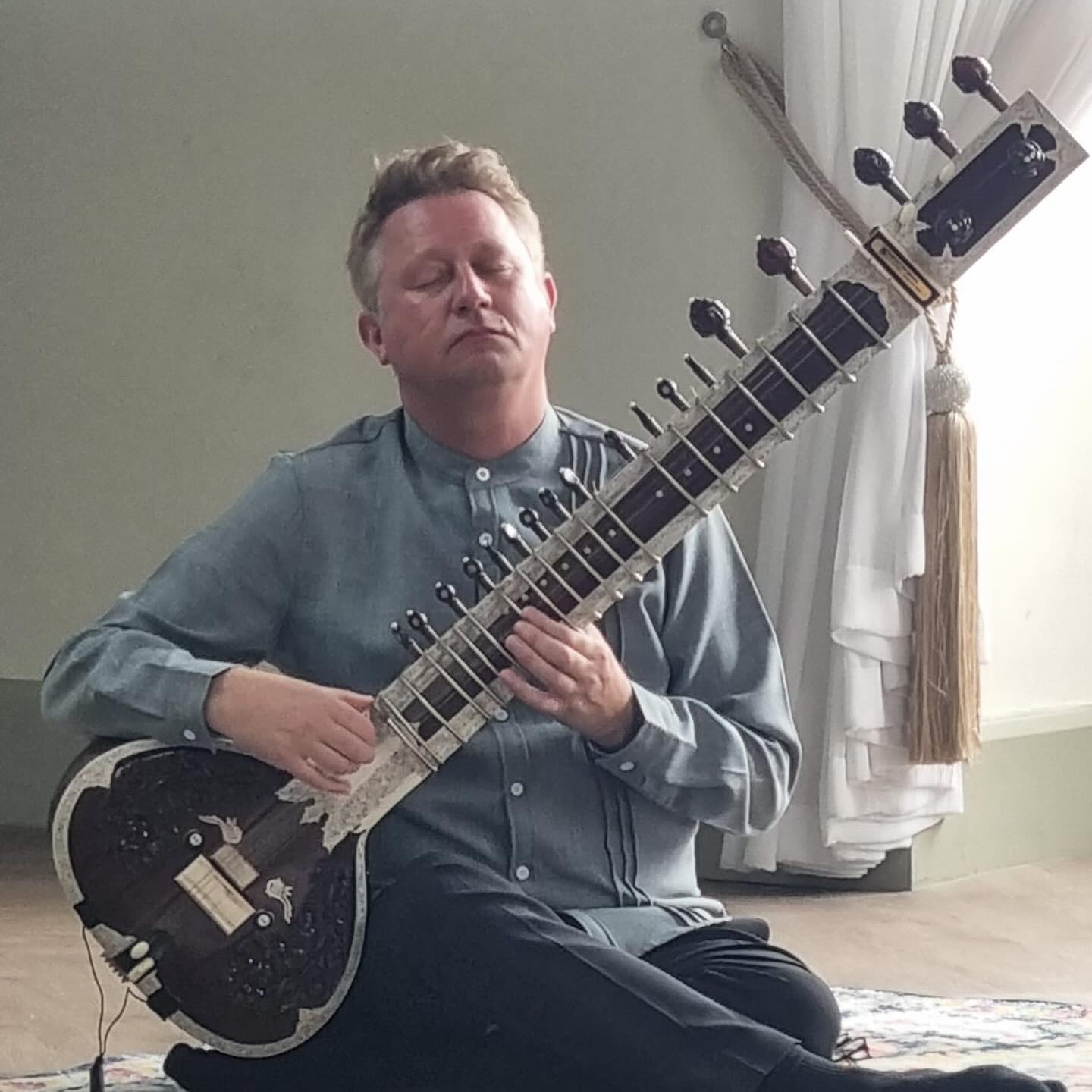
Nick Able grew up in Newcastle dreaming of guitars and far-off stages - dreams that would eventually lead him to study in India, perform internationally, and explore diverse corners of the music world from classical to electronic to meditative soundscapes.
Now after more than twenty years of creative exploration, Nick is forging a new artistic identity rooted in connection, wellness, and the healing potential of sound.
In this interview, he opens up about his journey so far, the people who shaped him, and the exciting projects he's bringing to life next.
You were praised for your musical talent as a teenager by Sting and Mark Knopfler. How did that moment shape your confidence and career path?
I was consumed by music; I didn’t really know anything else, and to me that was normal. I had sent tapes of my playing to try to raise money to attend Berklee College of Music in Boston, USA, and two of the people I sent them to were Sting and Mark Knopfler, as they were both local musicians from my home of Newcastle. When I got a written response in the post from each of them, it was amazing, and then when I read their responses and praise for my playing, it was great — but I was so focused on music and my path that I didn’t really think about it too much at that time. I kept those letters and still have them to this day, and I suppose, looking back, having that occur surely must have been a big part in confirming that I wasn’t wasting my time and efforts in music. But yeah, I didn’t ponder on it very much at all, as I was so obsessed with practice and learning, which was 100% my focus and what consumed my mind 24/7.
What first drew you to the sitar, and what’s the most profound lesson you learned during your decade of training under Pandit Ravi Shankar?
A friend of mine who played bass in a local band had a sitar and some Ravi Shankar CDs, and that was the first time I was really exposed to that genre of music. I had loaned some CDs and started to listen to Indian classical music, which I had sort of been listening to already via John McLaughlin and Shakti. I remember playing my friend’s sitar in his bedroom and being able to play a few notes on it, and I was totally in awe of this amazing instrument. I was always drawn to the great masters in music, and from that point I started to read, listen, and learn about Indian classical music and the great Maestro Ravi Shankar.
There really isn’t one profound lesson I could pick out. When you are in the presence of a renowned musician and artist on that level, everything is a lesson. As long as you are observant enough, you will see lessons in everything — and quite honestly, all of them are profound. That’s really how it is.

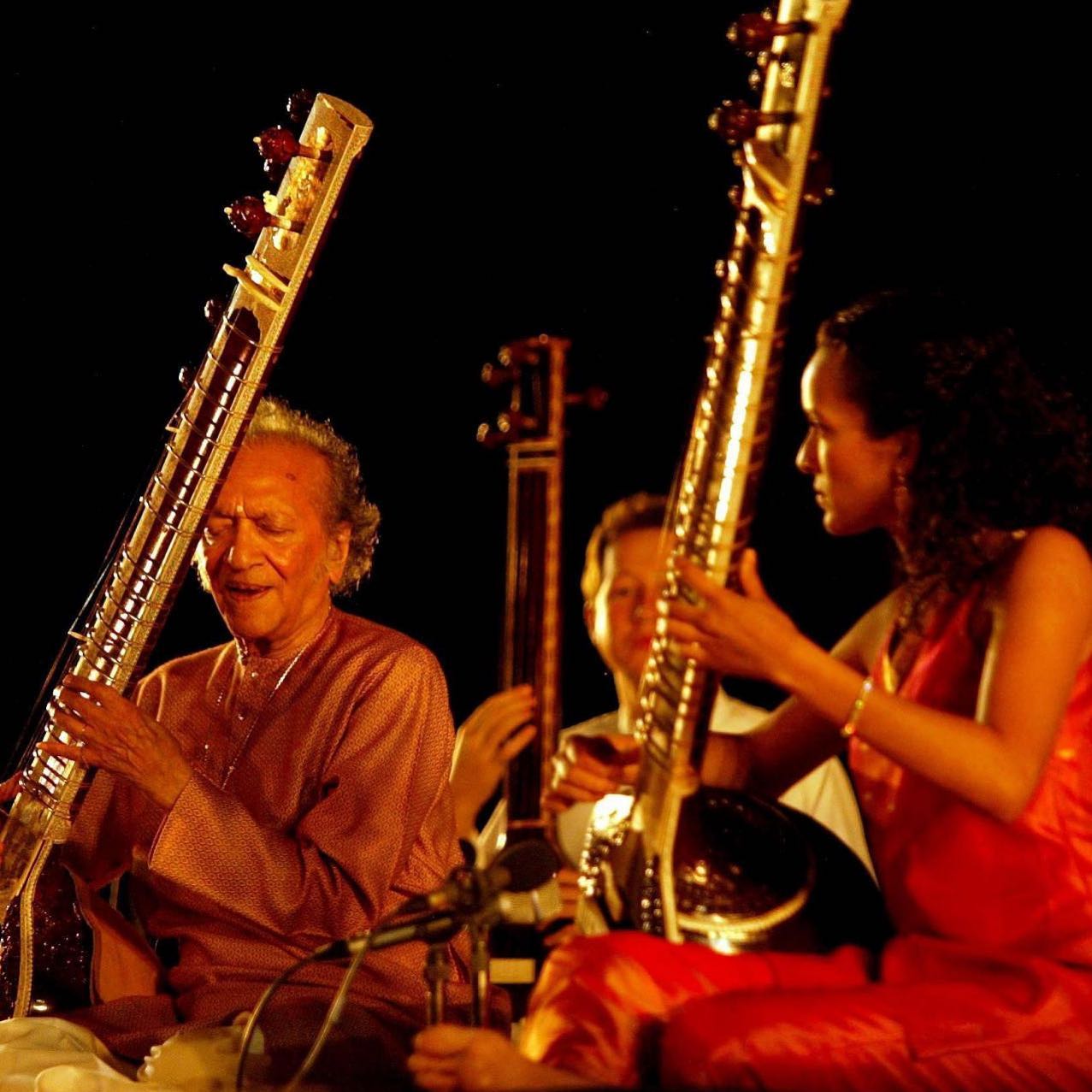
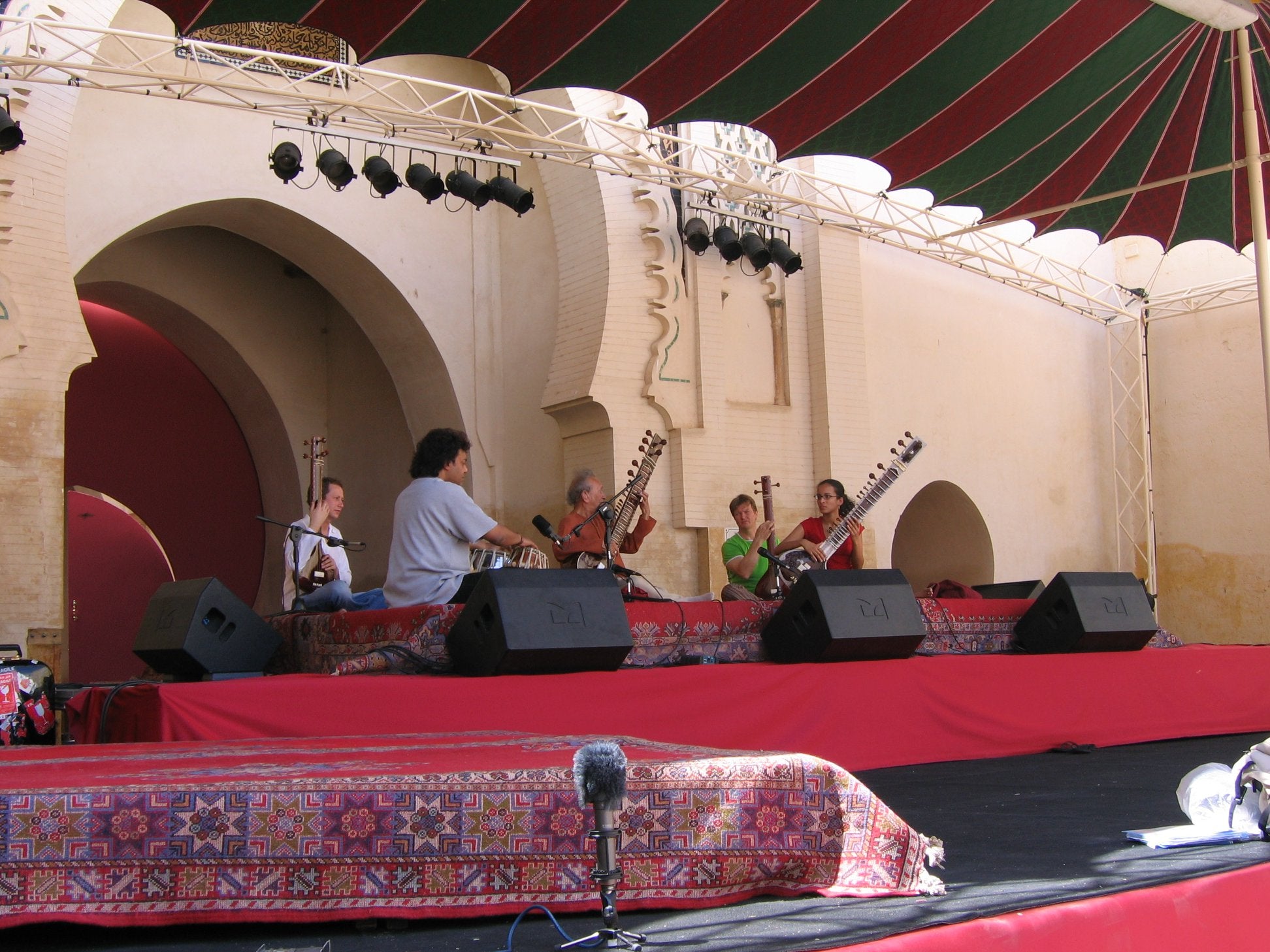
You’ve performed at legendary venues from Carnegie Hall to the Royal Albert Hall. Which performance has left the biggest mark on you personally?
Every single concert I accompanied my great teacher in was an experience on another level that I cannot put into words. But the concert that stands out the most for me was the first full performance of the album Passages by Ravi Shankar and Philip Glass at the Philharmonie de Paris. Passages was also the first Ravi Shankar CD I ever bought, and I had listened to it so many times in my teenage years. It was certainly one of those surreal moments in life, and this concert left us all in awe. It truly was one of the most incredible things to witness and be part of. There are no words for some events in life, and this was definitely one of them.

Video
Your work spans TV, video games, multimedia, and film. How does composing for these mediums differ from performing live on stage?
Ninety-five percent of the performing I’ve done has been accompanying my Guru or Anoushka, which was very much in the background, and everything is so well organised and put together that once you know the ropes, it’s quite straightforward — follow the rules and do what is required. Working at home in front of a blank screen in Logic or Ableton is so different; it’s quite scary, as you’re alone in a room, sat in front of a computer. There’s nobody else there to guide you, you’re totally exposed, and you have to deliver everything yourself. There is nowhere to hide, and the result is 100% on you!
You’ve bridged traditional sitar, electronica, and modern composition—even earning the nickname “Nick Able-ton” on tour. How do you approach blending these worlds in your music?
I go with what I feel and hear, and I don’t really think about genres or this or that. Theoretically, I know what scale or mode will give a certain sound, and the same with chords and harmony, but I don’t really dwell on that too much. Once I’ve chosen something, it tends to stay fixed, which comes from my training in Indian classical music and the raga forms. From there, I’m focused on how I can portray what I want in the music. I just play what I feel and go with what I hear.
If I have an idea in my mind, it’s usually a particular feeling that I get from the music, and that dictates where I go with it. I’m searching for what the piece will feel like — in terms of emotions, sounds, and how it will make me feel as well as the listener. So that could be anything I have in my musical palette, setup, equipment, effects, and instruments, and they all work together in different ways.


You’ve had a chance to try some of Kompose Audio’s instruments. How do they inspire or support your creative process?
I'm a huge fan of long-form ambient and evolving meditative music. I spend hours listening to it, and I wanted to start creating music like this to improvise over. When I got back into music production a couple of years ago, things had really changed a lot since I was last involved in all of that — which was more than 10 years ago! To get started, I wanted something I could dive into, use, and get something going with fairly quickly.
I had work booked — events for meditation and sound bath–type sessions, but with melodic instrumentation played over the top. There was so much to learn again and so many new tools in the programs I’d used for years, Logic and Ableton. So I had a bit of a learning curve and a deadline to have a 90-minute set ready by.
I chose Kompose Audio because your instruments sound absolutely incredible, they are user-friendly and easy to use, but still offer plenty of room for tweaking — without a user interface that takes a month to understand. The everlasting, evolving textures were also what really appealed to me, because I didn’t want to create simple loops; I wanted the music to evolve, breathe, and not repeat itself at all.
Lastly, the music I was writing for the planned sound bath events was all going to be in a particular frequency, and the first one was in 432 Hz. The fact that some of your instruments are already tuned to this, and that I didn’t need to delve into manual retuning inside Ableton, made you guys jump right to the top of the list of the umpteen virtual instruments out there. I’ve used them almost exclusively for my work over the last year.
Having worked in online music education for over a decade, where do you see the future of digital music learning heading?
Everything will go into the Metaverse. I was fortunate to meet with a great team in London a few years back who are very high up in the development of the Metaverse in the UK. I think everything will evolve and transfer to this type of platform in the coming years, as the technology becomes more widely available to the general public.
After years of meditation and deep frequency work, you’re now bringing sound healing into your music. How does this influence the kind of music you want to make now?
This has been the number one influence in my life over the last 4–5 years. I was in such a dark place for a few years, and the main thing that really helped me come out of it was frequency music, which I discovered in desperation while looking for ways to heal myself and find peace. It truly changed my life in the most profound way and very quickly became a daily ritual for me.
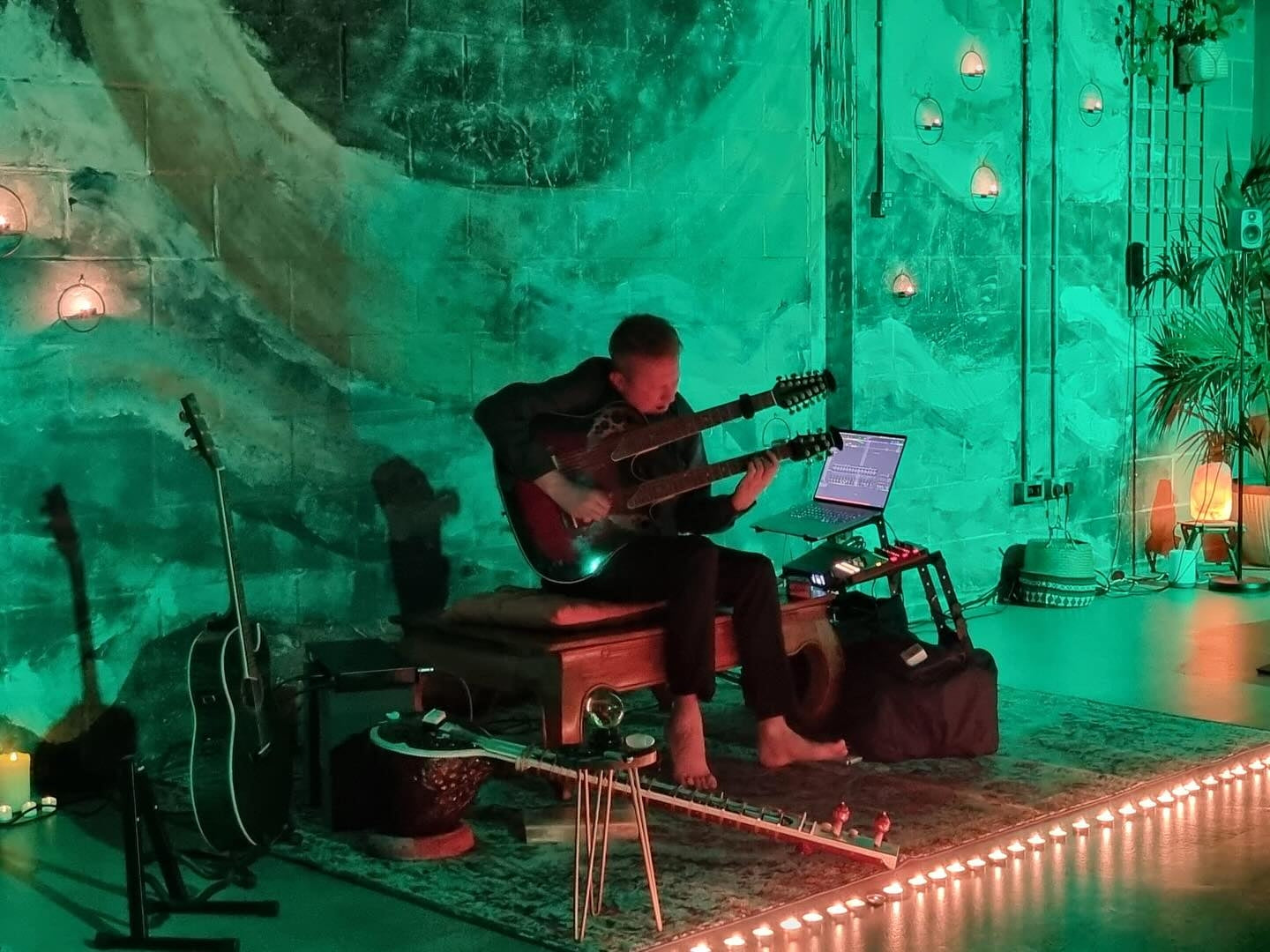
I was so inspired by this music and its impact on me that it led to discovering sound baths, crystal alchemy and Tibetan bowls, gongs, and sound healing. I went on retreats, attended sound baths regularly, and I started to hear melodies in my mind over the sounds I was hearing. That developed into wanting to create this music myself — but not with bowls and gongs; instead, with my own instruments, synthesis, music production, and immersive audio. And that is exactly what I went ahead and did.
I’ve been doing this for two years now, but I really developed it in the last 12 months, having done several performances in a local yoga studio and at other venues catered toward wellness. I’m loving doing it — it has truly reignited my passion for music and creating again — and it even links back to the years I spent with my Guru. He would actually tune his sitar to 438 Hz, not 440 Hz, and I never really understood why. Discovering frequency music really taught me about all of that, and it became an amazing link back to what I had already been doing for so many years with Indian classical music, just in a brand new way. It has completely changed my life and how I think about and hear music.
If you could collaborate with any artist—past or present—who would it be, and what kind of music would you imagine creating together?
There are so many artists I love who I could imagine working with, but I suppose it would have to fit with what I'm doing. As much as I totally want to say Steve Vai or Pat Metheny, who are two of my biggest influences, I don't think it would fit — so I'm going to say Jon Hopkins. His music is a huge influence on me, and I just love his work. I often find myself listening to it and hearing melodies in my head that I could add with my sitar or guitar.
The immersive 360 audio he creates also appeals to me, as I use this format for a lot of my own work. I love to pan my sounds around a space and have things coming from different parts of the room. Jon is so developed in his craft, and I get completely lost in his music. I would love to play within that world and integrate my sound into what he does.
Looking ahead to your first solo album in 2026, what can listeners expect, and how does it reflect the next chapter in your musical evolution?
The concept is to truly do a solo album — just myself. The music I've been writing and performing over the last 12 months in sound bath events has developed so much that I want to record and release it. The plan is to do a “live lounge”–style recording, all done live in the studio. No edits, nothing — just a true live performance of music written and created completely spontaneously on the spot.
It has four main sections or movements, each with its own motifs, themes, instrumentation, and a lot of improvisation. I’m really excited to get it done and released. It draws from Indian classical, Middle Eastern, ambient electronic, frequency-based music, jazz, and fusion improvisation, taking listeners on a journey through sound and the ether.
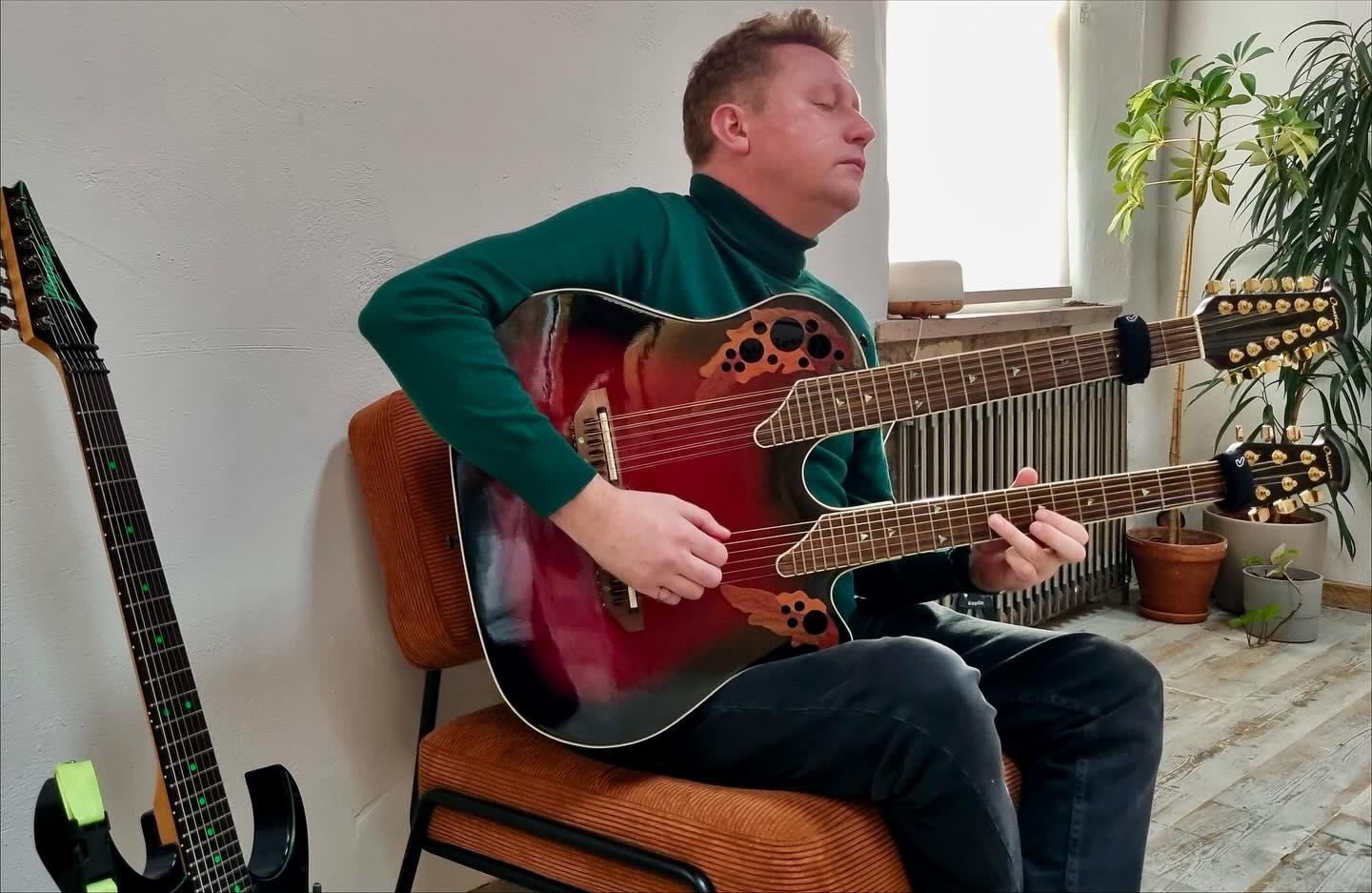
Nick’s story reminds us of what becomes possible when dedication meets imagination — when music moves beyond performance and becomes a space for connection, healing, and discovery. His journey has carried him through traditions, innovations, and deeply personal transformations, always with a willingness to evolve and explore new realms of sound.
His path is still unfolding, and we’re honoured to share a part of it — and excited to see where his next chapter leads.